

"Wow, is that pretty!"
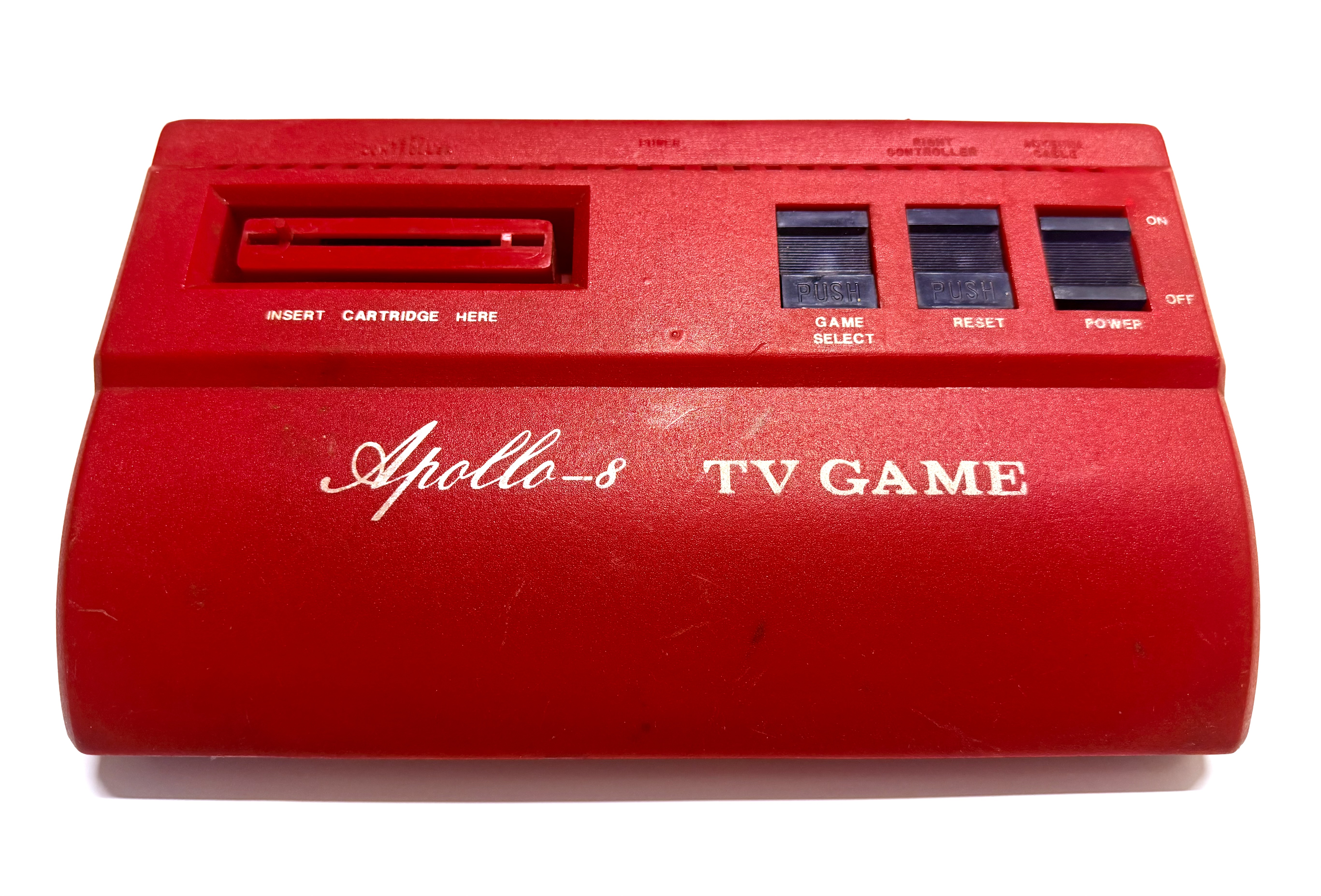
Those were the words of astronaut William Anders as he looked upon the Earthrise while orbiting the moon on Christmas Eve in 1968 as part of the Apollo 8 mission. The circumstances were just slightly different, but... I was thinking similar thoughts the first time I looked upon the 新建 (Xinjian) model XJ 8811 “Apollo-8 TV GAME”, a gorgeous, eye-catching Atari 2600 clone manufactured in the late 1980s by 上海新建电子电器有限公司 (Shanghai Xinjian Electronics and Electrical Co., Ltd.), a subsidiary of 上海无线电二十一厂 (Shanghai 21st Radio Factory) in China.
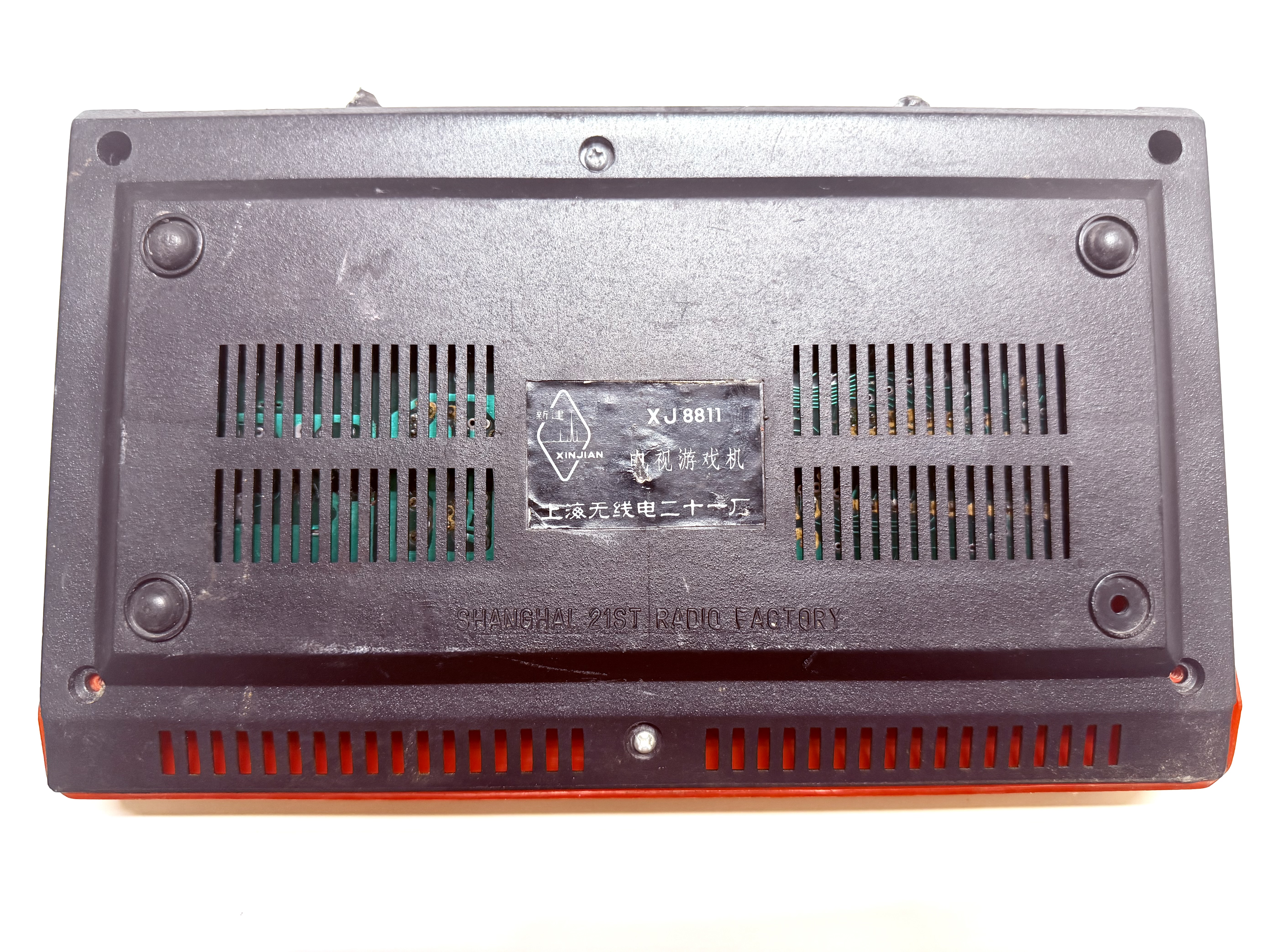
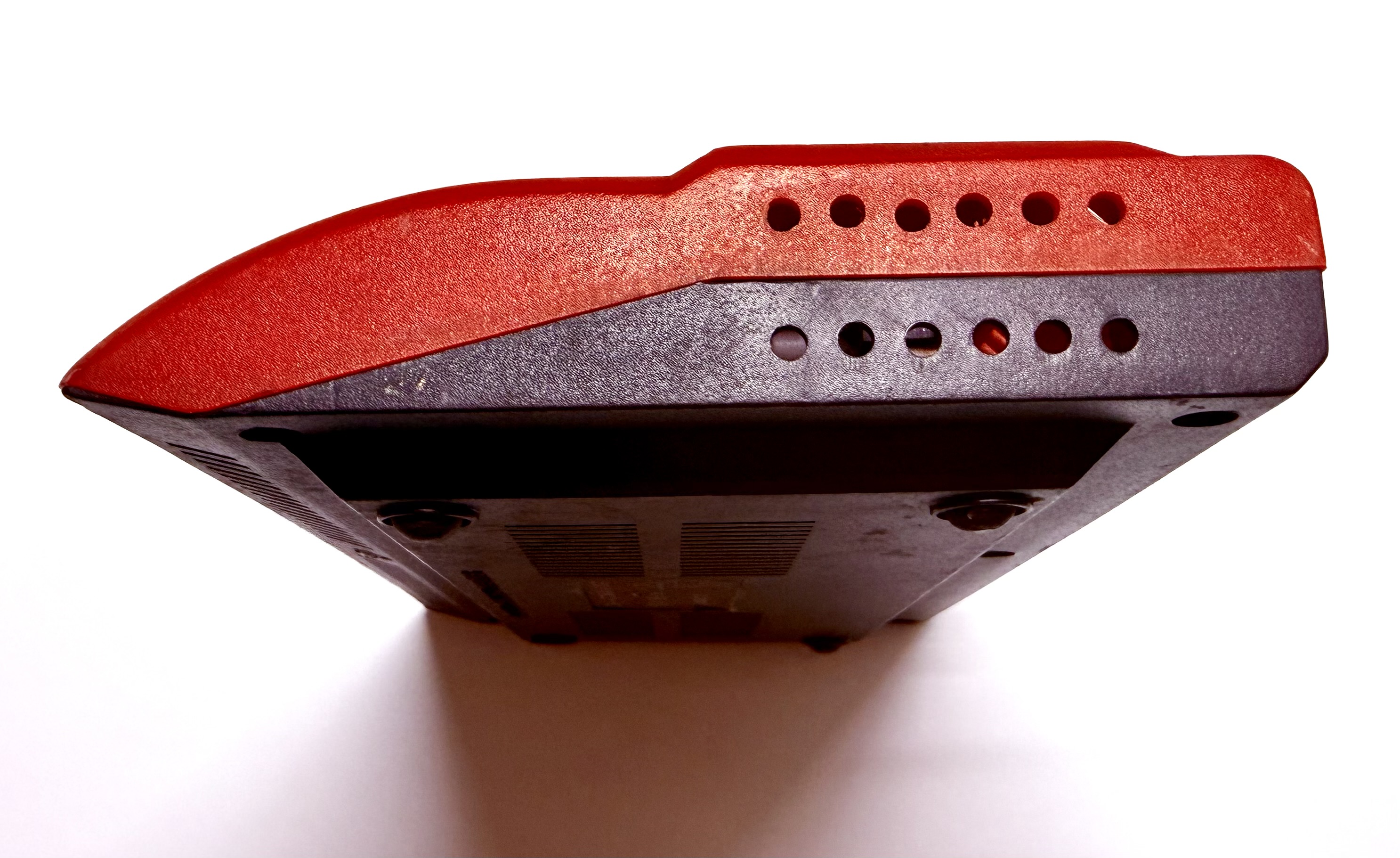
The proliferation of early video gaming within China -- including the Atari 2600 platform -- has remained a largely unknown story to most of the world, and especially so to many of us (like me!) currently behind a pesky language barrier. I’m excited to begin to play a small part in alleviating this, to share what I've learned. I decided to start with a post about the Apollo-8 clone both because of how striking it is and how exceedingly rare it seems to be, even in China. It has an overall similarity to the Atari 2600 Jr., but it uses a form factor not seen elsewhere and it stands out in a crowd with its fire-engine red textured plastic.
THE FACTORY
The factory that produced the Apollo-8 TV GAME, 上海无线电二十一厂 (Shanghai 21st Radio Factory), was located at 上海市静安区江宁路631号 (No. 631, Jiangning Road, Jing'an District, Shanghai). This location now seems to house a Bank of China branch.
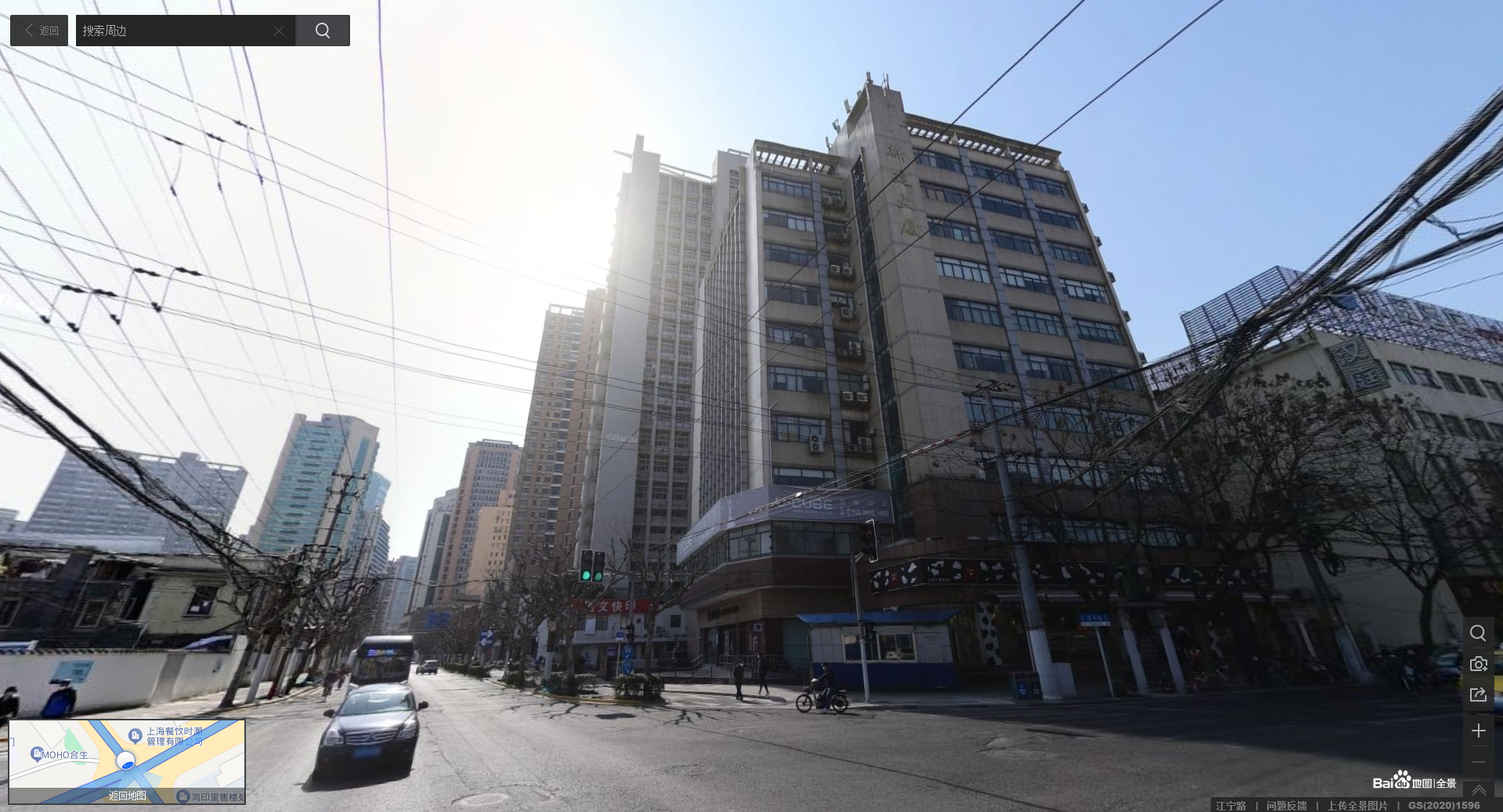
The factory would become the largest oscilloscope manufacturer in all of China during the mid-1980s. Collaboration with Western business interests and general allowances for the growth of private enterprise flourished within China thanks to the 改革开放 (Reform and Opening Up) policies of Deng Xiaoping toward the very end of the 1970s. These economic and political "modernizations" were catalysts for rapid technological and commercial growth, especially in the following decade. Relatedly, the naming of this clone was likely only possible due to the prescribed cultural changes of the late 1970s and 1980s; I could find no evidence that China acknowledged the Apollo program contemporaneously with its activities (but if you can point me to something, please do).
In 1985, the factory signed a $5 million contract to produce U.S.-based company Tektronix oscilloscopes for sale under a Chinese brand name domestically. But they did not end up producing only oscilloscopes; as I make future posts about China-produced clone consoles, you'll see that state-owned factories expanding their production to very different categories of products -- including video games -- was not an uncommon occurrence.
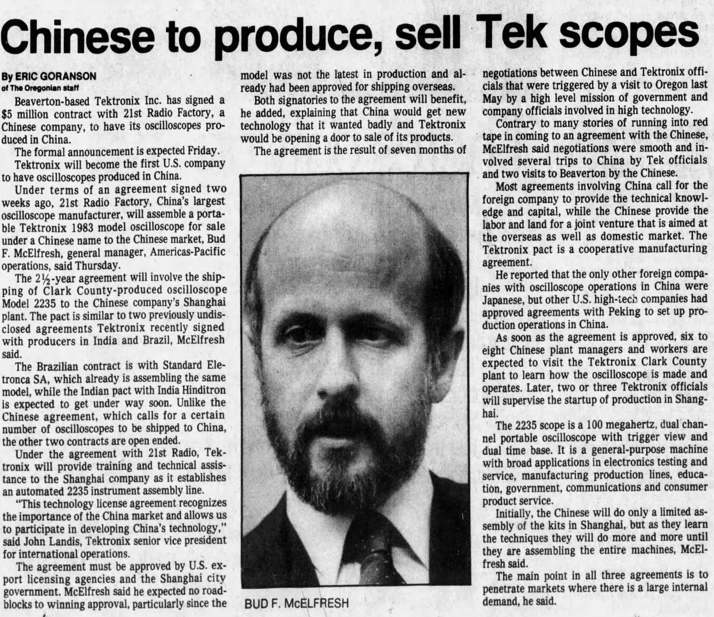
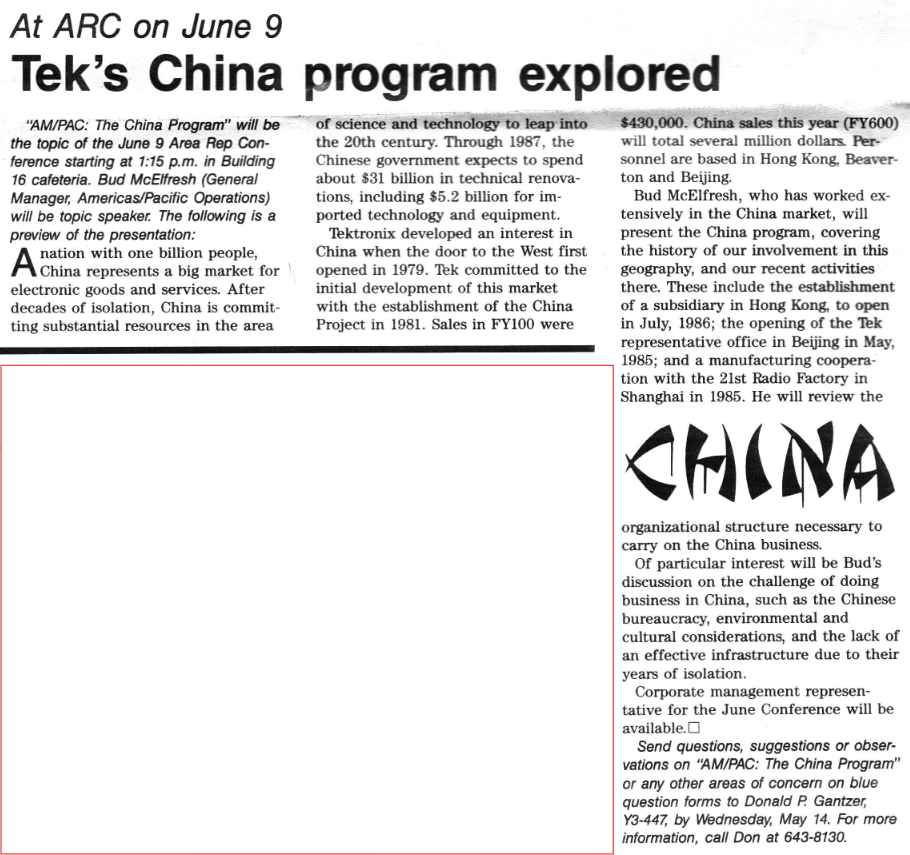
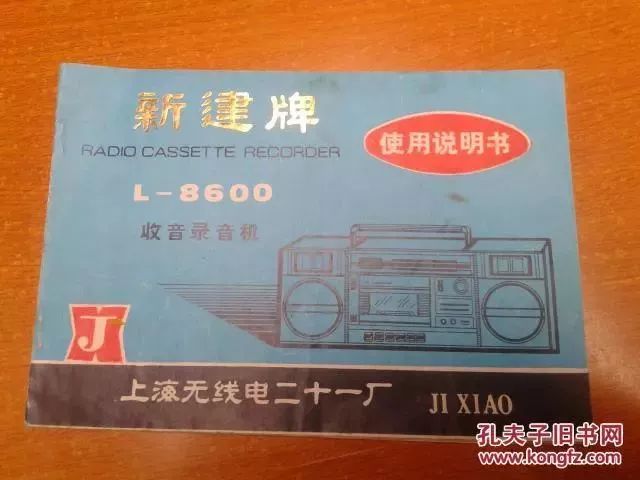
In addition to oscilloscopes, the factory also produced television and radio equipment, as well as numerous models of electronic (musical) keyboards with 新建 (Xinjian) branding and XJ model numbers, just like their oscilloscopes. In speaking with Mr. Jason Chen, a former employee of the 21st Radio Factory’s main branch (engineering/manufacture of oscilloscopes) during this time period, I learned that the Apollo-8 had been produced in a separate branch of the factory.
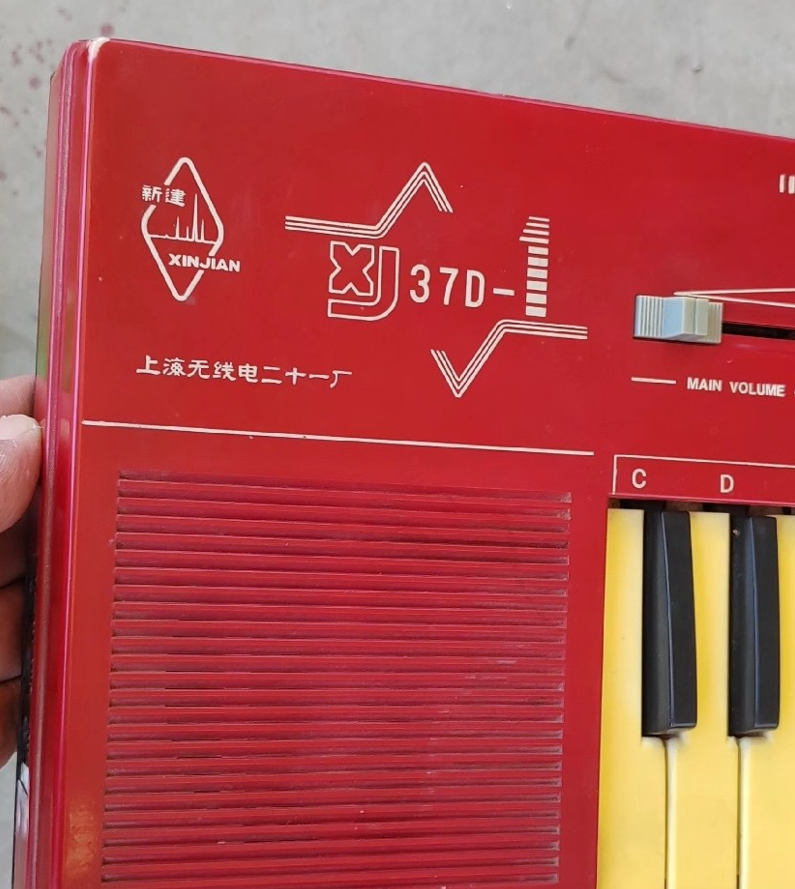
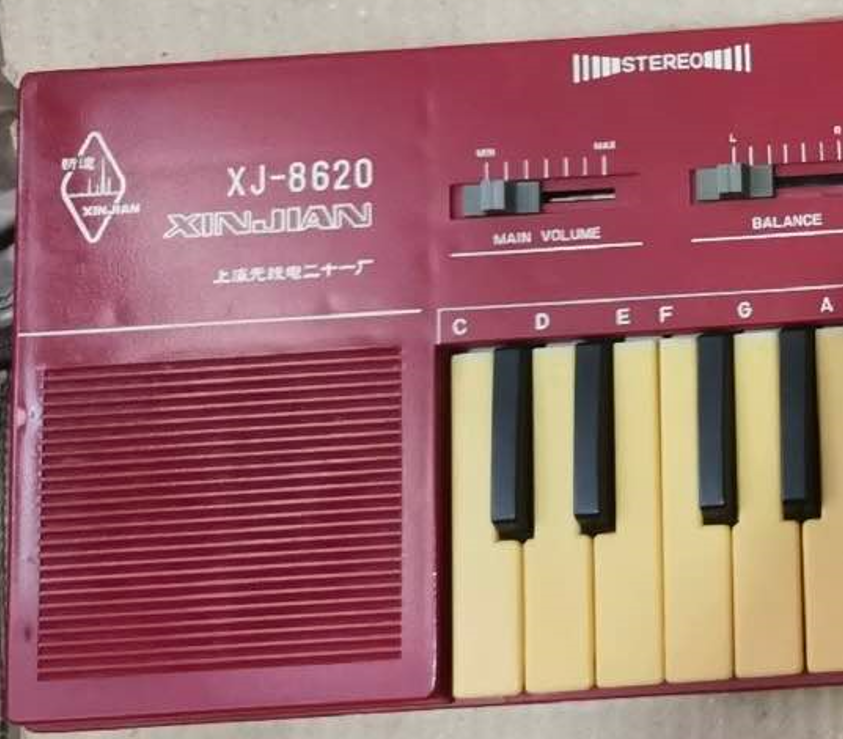
Potentially, these XJ37D-1 and XJ-8620 electronic keyboards were manufactured from the same red plastic stock as the XJ8811 Apollo-8. Images cropped by the author from Chinese internet marketplace listings.
For a complete history of the factory, scroll to Appendix 1 at the bottom of this article for a translation to English (via Google Translate) of text posted at https://www.eet-china.com/mp/a52402.html that discusses the various Shanghai Radio factories, including No. 21.
THE BRAND
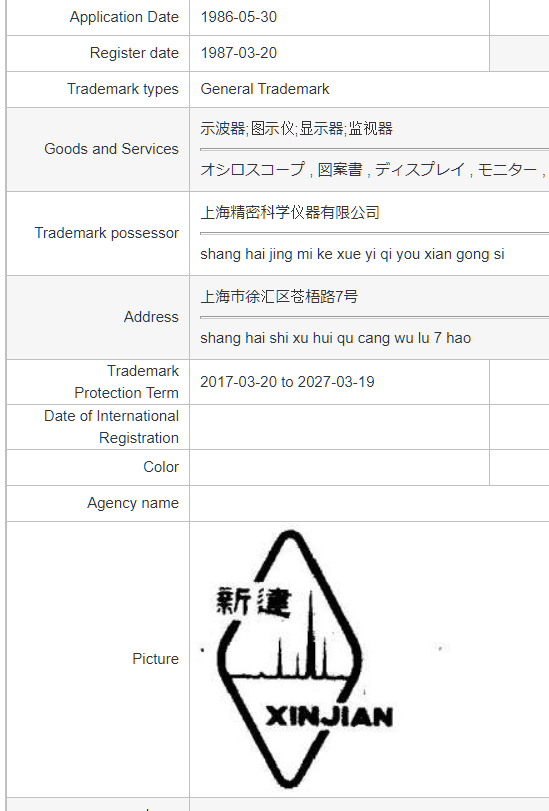
The diamond-shaped Xinjian brand logo trademark application was filed in May of 1986 and was registered in March of 1987 by 上海精密科学仪器有限公司 (Shanghai Precision Scientific Instrument Co., Ltd.), almost certainly a company related to the aforementioned Shanghai Xinjian. This trademark registration timeline aligns well with the height of 2600 clone production in mainland China (late 1980s). The XJ8811 model number may indicate a 1988 manufacture, but for now this is only a guess based on available model numbers and the seemingly non-coincidental timeframe.
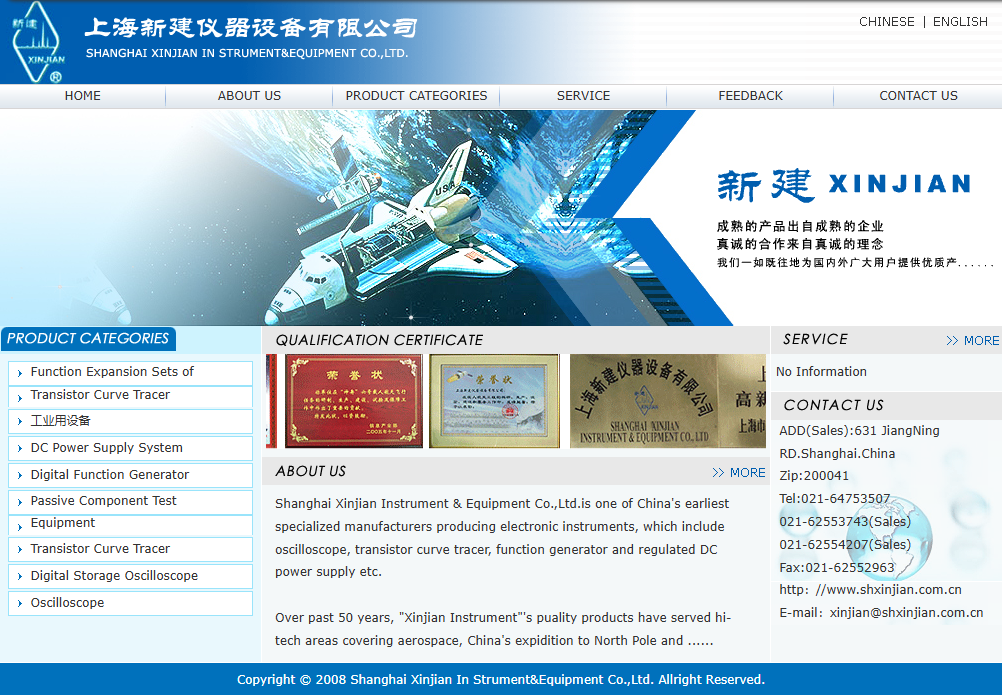
Shanghai Xinjian still had a website accessible into 2023 at shxinjian.com, but as of today it can only be found on the Internet Archive’s Wayback Machine. Unfortunately (but unsurprisingly), the site does not mention a brief foray into the video game world.
THE CONSOLE
I first learned of the Apollo-8’s existence in early 2021. After failing to secure the first one that I saw for sale, nearly four full years passed before another one turned up — one that I was fortunate enough to immediately purchase. A month later, after a slow voyage across the Pacific Ocean, this elusive machine was finally in my hands.
The most noteworthy thing about the Apollo-8 is its unique layout; it’s at least partially “backwards” when compared to a normal 2600 and nearly all clones -- its switches are on the right side of the console, while the cartridge port is on the left. At one point it had hardwired controllers; the cables got cut at some point. I've seen a total of four of these in the years since first seeing it; I have never seen the controllers.
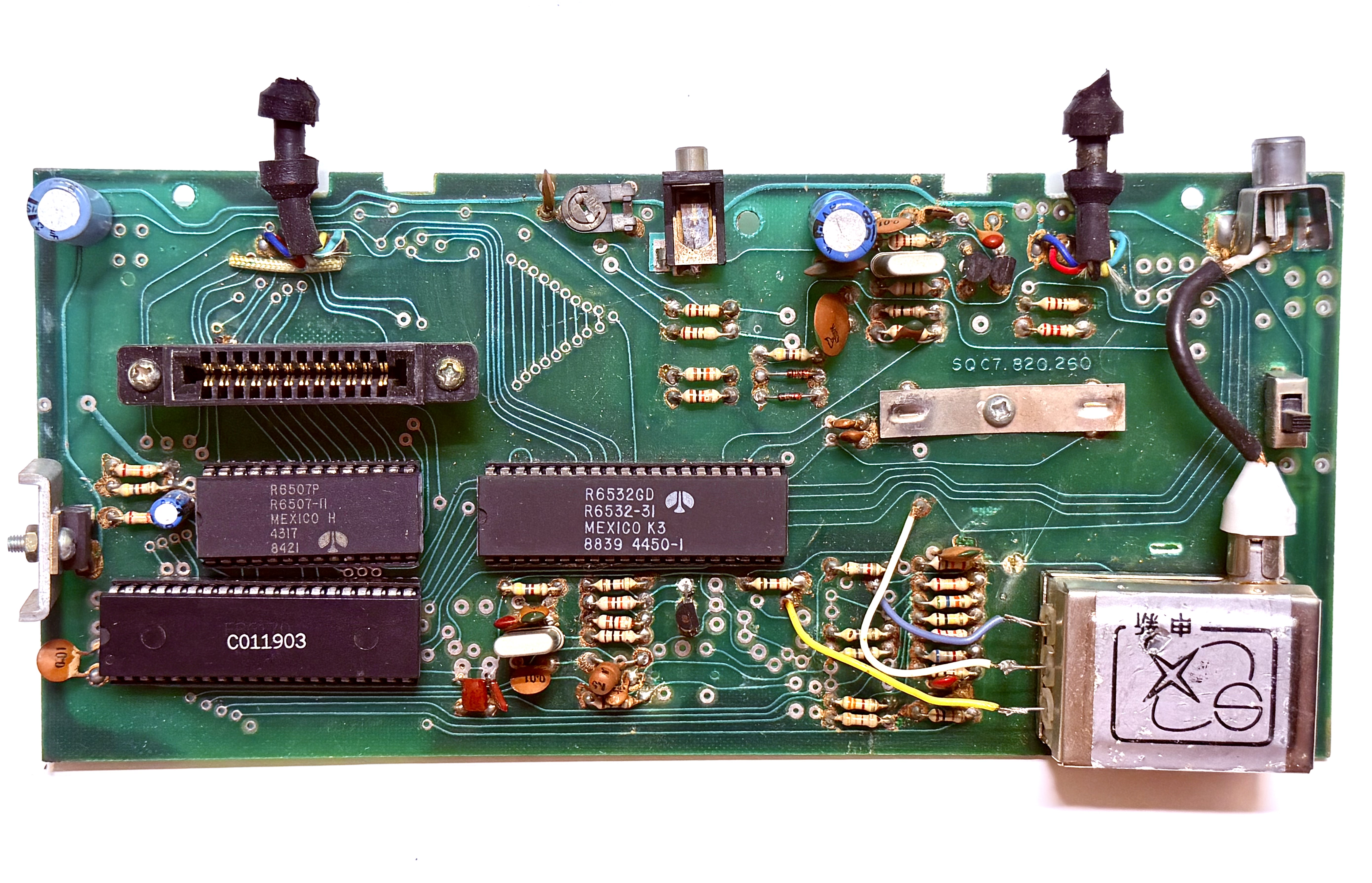
The RF modulator has an unusual logo printed on it along with the text 申新 (Shenxin):
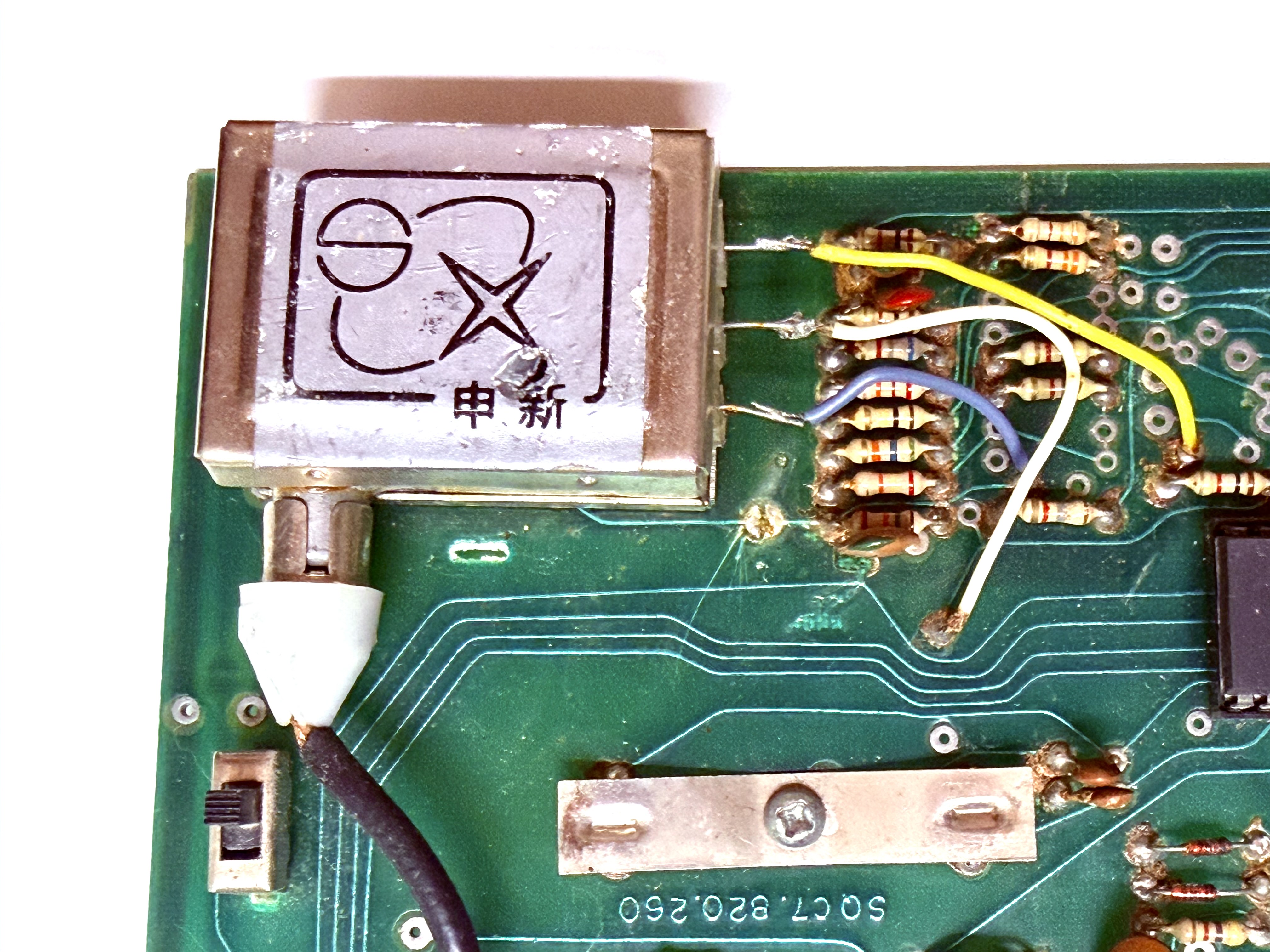
While slightly different than the logo on the RF modulator, it looks like it may be related to 上海市申新电子仪器厂 (Shanghai Shenxin Electronic Instrument Factory), who filed to register a very similar logo as a trademark in late 1989-1990.
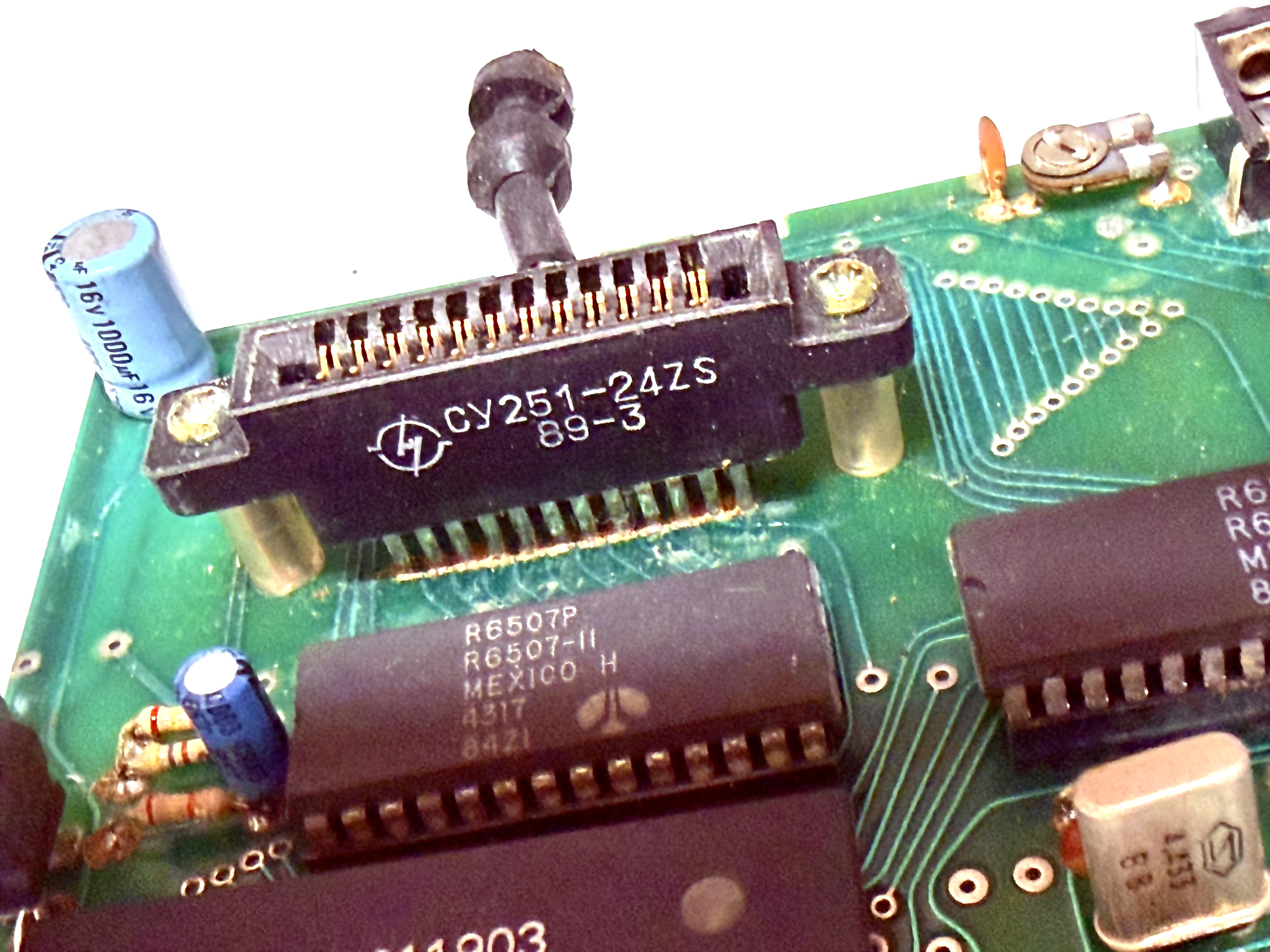
Not too much else was revealed by looking inside, unfortunately. The components are not in the greatest condition overall – I think powering it up in its current state would be a mistake, especially when nothing much would be gained in the process. The clone uses common Mexico-sourced Rockwell-manufactured 6507 CPU and 6532 RIOT chips, as well as a generic unbranded TIA clone chip -- not uncommon for 2600 clones of this era. The PCB edge connector is from a brand I am wholly unfamiliar with – 锐驰 Rui Chi – well, at least according to this one single page I could find that mentions it.
A CARTRIDGE, TOO?
On a related note, in late 2021 I purchased a “V-case” cart from China that had a sticker on the back indicating that it was made in the same place as the Apollo-8 console: Shanghai 21st Radio Factory. This is the only V-case cart like this that I’ve ever seen.
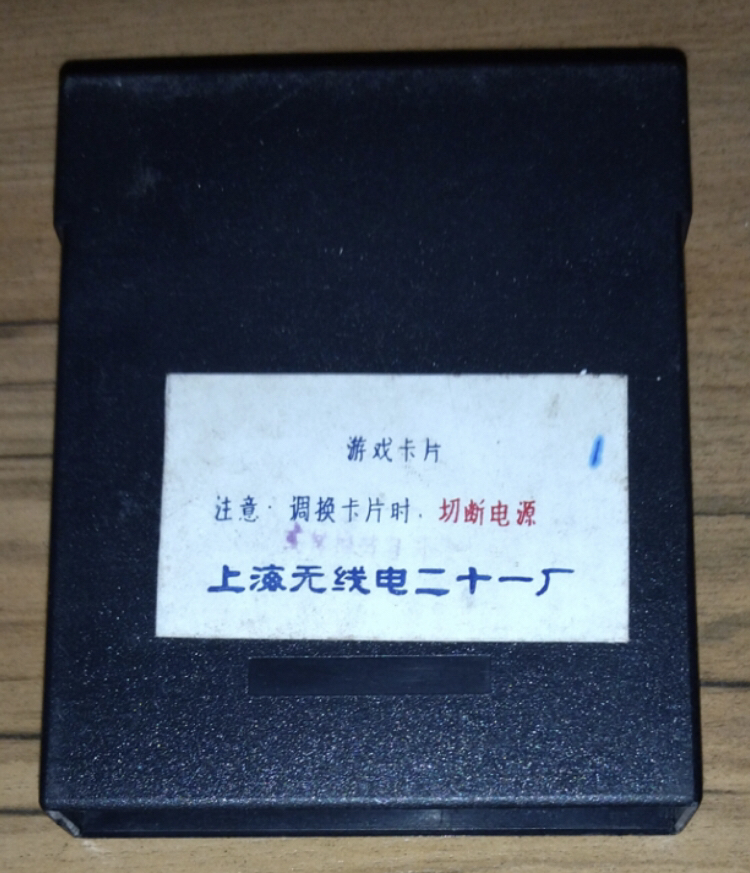
I think it makes sense if I keep the cart and the Apollo-8 console paired together in my collection; two items “born” in the same place, then reunited half a world away, decades later. Pretty amazing!
Special thanks go out to Hally (VORC) for plenty of added information, general assistance, and some translation. If you worked at Shanghai Radio Factory No. 21 when the Apollo-8 was produced or if you happen to know more about this console’s history or manufacture by Xinjian, please get in touch with me! Likewise, if you spot mistakes, I would love to correct them, so please speak up and let me know about them.
APPENDIX 1
Xinjian Electric Instruments Trading Company was founded in November 1951, primarily manufacturing oscilloscopes. In August 1952, it was renamed Xinjian Electric Instrument Industrial Society. It produced five models: the 103, 105, 113, 115, and 125. In 1956, Xinjian Electric Instrument Industrial Society was renamed Xinjian Electronic Instrument Factory. That same year, during the industry-wide public-private partnership, Xinjian Electronic Instrument Factory merged with over ten small businesses, including the Jingqin Electric Industrial Society, expanding its production scale and becoming capable of manufacturing dual-trace, synchronous, and pulse oscilloscopes, earning a considerable reputation in the radio industry. In 1960, it merged with the Huacheng Cigarette Factory, increasing its workforce to 1,665 and further expanding its production facilities. By 1965, it had become a leading domestic oscilloscope manufacturer. In 1966, it was renamed Shanghai Radio Factory No. 21.
Over the years, the factory has produced a comprehensive product line encompassing over 70 varieties across 10 categories, including general-purpose, synchronous, broadband, high-sensitivity, memory, sampling, vector, digital storage oscilloscopes, logic analyzers, and transistor tracers. The factory has also developed electronic keyboards and radio and television equipment. The factory has introduced production technology for 100 MHz digital storage oscilloscopes and 100 MHz general-purpose oscilloscopes from the United States, as well as logic analyzers from the United Kingdom, significantly improving its product quality. Due to its advantages in product development, quality, variety, and cost-effectiveness, the factory's oscilloscope and tracer production has long been among the highest in the country, with five products receiving the National Quality Silver Award. In 1985, the factory received the Ministry of Electronics Industry's Quality Management Award. In 1988, it was recognized as a Shanghai Advanced Enterprise.
At the end of 1990, the factory had 1,676 employees, including 305 technicians. The factory occupied 13,840 square meters, with a building area of 30,999 square meters and fixed assets valued at 20.41 million yuan. Annual production of electronic measuring instruments reached 10,000 units, including 9,204 oscilloscopes and 796 tracers, accounting for 29.9% and 41.7% of the national total, respectively. The factory also produced 48,000 electronic keyboards. The annual industrial output value reached 35.89 million yuan, with a profit of 1.25 million yuan.
APPENDIX 2
上海新建仪器设备有限公司创建于1999年。上海新建仪器设备有限公司保留了原上海无线电二十一厂生产经营、技术开发的精华和产品、商标等优质资产。继续和拓展原上海无线电二十一厂电子仪器经营业务,生产和经营“新建”牌示波器、半导体管特性图示仪、信号源、直流稳压电源及安规仪器等电子仪器设备。
“新建”产品问世几十多年来,为我国航空、航天、“神舟”号载人飞船、核武器研制、南北极科学考察、北京正负电子对撞机等尖端科研项目和我国电子工业的发展作出了应有的贡献,先后受到国务院、国防科工委、中国载人航天工程办公室及信息产业部的嘉奖。“新建”产品被广泛应用于国防、科研、教育及工业生产等领域。
上海新建仪器设备有限公司始终不渝地以新品求发展,以质量求生存,把“第一次就把事情做对,为用户提供满意的产品和服务”作为企业宗旨,竭诚为广大用户作出新的贡献。
Shanghai Xinjian Instruments & Equipment Co., Ltd. was established in 1999. It retains the essence of the former Shanghai Radio Factory No. 21's production, operations, and technological development, as well as its valuable assets, including products and trademarks. It continues and expands the factory's electronic instrument business, producing and selling "Xinjian" brand oscilloscopes, semiconductor characteristic tracers, signal sources, DC regulated power supplies, and safety instruments.
Over the past several decades, "Xinjian" products have made significant contributions to my country's aviation, aerospace, the Shenzhou manned spacecraft, nuclear weapons development, Antarctic and Antarctic scientific expeditions, the Beijing Electron-Positron Collider, and other cutting-edge scientific research projects, as well as the development of my country's electronics industry. They have received awards from the State Council, the Commission of Science, Technology and Industry for National Defense, the China Manned Space Engineering Office, and the Ministry of Information Industry. "Xinjian" products are widely used in defense, scientific research, education, and industrial production.
Shanghai Xinjian Instruments & Equipment Co., Ltd. has always pursued development through innovation and survival through quality. Adhering to the corporate mission of "doing things right the first time and providing customers with satisfactory products and services," we are dedicated to making new contributions to our customers.